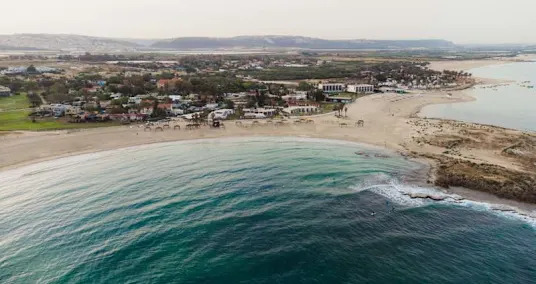
The discovery was made in an ancient shipwreck in the Dor Lagoon near the Carmel Coast, where archaeologists recovered nine pieces of unprocessed iron known as “blooms.”
Researchers from the University of Haifa said Wednesday that an underwater excavation off Israel’s northern Mediterranean coast uncovered what they described as the earliest known cargo of raw iron transported by ship, dating back around 2,600 years, Xinhua reported.
The discovery was made in an ancient shipwreck in the Dor Lagoon near the Carmel Coast, where archaeologists recovered nine pieces of unprocessed iron known as “blooms.” According to the university, the find provides direct evidence of how iron was transported in its earliest commercial stages.
The material was preserved in its original form, having solidified directly in a smelting furnace without undergoing forging or further refinement. Researchers said this distinguishes the cargo from later iron artifacts that typically show signs of shaping or tool-making.
Unlike copper and bronze, which could be melted into liquid form in ancient production processes, iron was heated with charcoal to produce a solid, porous mass. That mass was generally hammered to remove impurities and create denser material suitable for tools and implements.
The recovered blooms showed no indication of that secondary processing stage, suggesting they were transported immediately after production.

Earliest iron shipment discovered in ancient Mediterranean wreck
To determine the age and condition of the cargo, researchers conducted microscopic and chemical analyses.
Radiocarbon dating was also carried out on charred wood embedded in one of the pieces, helping confirm the timeline of the shipment. The findings were published in the journal Heritage Science.
Researchers said the cargo indicates that iron was being moved in raw form from production sites to other locations for further processing, pointing to a level of specialization in ancient manufacturing and trade networks in the Mediterranean.
The University of Haifa said the discovery provides new insight into early iron production and distribution practices in the region.
LATEST POSTS
- 1
 Timothy Busfield turns himself in to face child sexual abuse charges in New Mexico
 - 2German foreign minister heads to China to talk rare-earth exports
- 3India's top court hears challenges to ruling on women's entry into temple
- 4The Best Portable Applications for Emotional wellness and Prosperity
- 5French rapper Gims placed under investigation for 'aggravated money laundering'





- Full SNAP benefits must be paid ‘promptly,’ USDA tells states as government reopens
- Nine in 10 German industrial firms expect Iran war to hit business
- Some gifted dogs can learn new toy names by eavesdropping on owners
- KJ Apa stars as Jimmy Stewart in new biopic: See his transformation
- An Investigate of 6 Creative Specialty Mixed drinks
- Former biotech CEO sued over COVID vaccine alleged insider trading
- Why is Jerome Powell being investigated? Making sense of the DOJ's probe into the Federal Reserve chair.
- Select Your Go-To Bluetooth Earphones
- New Cheetos and Doritos will be free of artificial dyes