Moscow has labelled Germany's international broadcaster Deutsche Welle (DW) an "undesirable organization," effectively banning its activities in the country.
The move follows a recommendation by the State Duma, Russia's lower house of parliament, DW reported on Sunday.
A government statement posted on Telegram on Saturday said the General Prosecutor's Office now considers DW to be "at the forefront of hostile anti-Russian propaganda." The prosecutor's office has not issued a separate statement.
DW Director General Barbara Massing criticized the tightening of the crackdown on free media by the Russian judiciary.
"Russia may label us an undesirable organization, but that won't deter us. This latest attempt to silence free media highlights the Russian regime's blatant disregard for press freedom and exposes its fear of independent information," Massing said in a statement.
"Despite censorship and blocking of our services by the Russian government, DW's Russian-language service now reaches more people than ever before.
"We will continue to report independently – on the war of aggression against Ukraine and other topics about which little information is available in Russia. So that people can form their own opinions," Massing said.
Russia has targeted DW for years, revoking accreditations and banning its broadcasts in February 2022. The broadcaster's website has been blocked, and DW was labelled a "foreign agent" in March 2022.
The new designation further tightens restrictions, as cooperation with an "undesirable organization" can lead to fines or prison sentences.
"This means that Russian employees of DW are particularly affected," Massing added.
Russian lawmaker Vasily Piskaryov said that cooperation with DW would now be punished as a violation of the law. He is chairman of the State Duma commission that investigates alleged foreign interference in Russia's internal affairs.
DW has yet to receive formal notification from the General Prosecutor's Office, Massing said. However, there are measures to circumvent censorship in order to continue to reach Russians in their home country.
In addition to the media, the Russian judiciary has also classified non-governmental organizations and foundations as "undesirable." The list of those affected is getting longer and longer.
Kremlin spokesman Dmitry Peskov once described the censorship measures in Russia as unprecedented and justified them as necessary in view of the "information war" accompanying Moscow's invasion of Ukraine.
LATEST POSTS
- 1
 Governments take targeted action as fuel prices hit retail
 - 25 Great High-Mileage Electric Vehicles Of 2024
- 3Medical team successfully delivers baby and removes massive tumor
- 4Find the Effect of Web-based Entertainment on Society: Exploring the Computerized Scene
- 5Tributes pour in for James Ransone, 'The Wire' actor who died at 46



- What's going around right now? COVID, flu, stomach bug on the rise
- Ten Awesome Authentic Realities That Will Leave You Interested
- Understanding Various Sorts of Financial balances: An Extensive Outline
- Getting Your Youngsters' Future: Grasping Legacy Regulations
- Recent studies prove the ancient practice of nasal irrigation is effective at fighting the common cold
- How to watch the last supermoon of the year
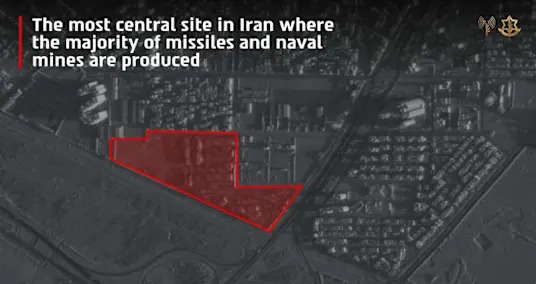
- IDF destroys regime's missile, sea mine production site in Yazd amid nationwide airstrikes
- Manual for Famous Beverages 2024
- Do-It-Yourself Home Style on a Careful spending plan: Imaginative Thoughts and Tasks