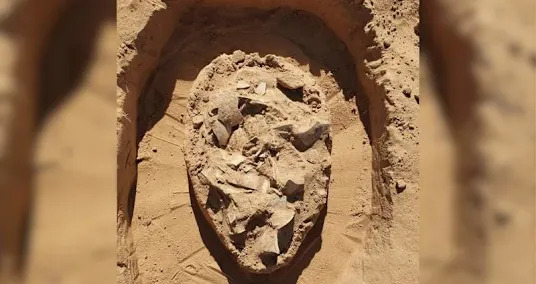
The eggs were discovered near the remains of a campfire believed to have been connected to prehistoric desert nomads who collected, cooked, and ate the eggs at the site.
A cache of ostrich eggs dated from approximately 7,000-years-ago was discovered at an archaeological site near Nitzana in southern Israel, the Israel Antiquities Authority (IAA) said in a Sunday social media post.
The eggs were discovered near the remains of a campfire believed to have been used by prehistoric desert nomads who collected, cooked, and ate them at the site.
"The proximity of the eggs to the fire and the manner in which they were found indicate that this was not a natural dispersal, but a deliberate collection," IAA archaeologist and researcher of nomadic cultures in the Negev and Arava Lauren Davis said. "One of the eggs was found right inside the hearth of the fire, a fact that strengthens the idea that they were used for food.”
Davis explained that these types of sites are often quickly covered by dunes and then exposed again over thousands of years as the sands shift in the wind.
"Sites of this type are quickly covered by dunes, and are exposed as the sands move over hundreds and thousands of years. This fact allowed for the exceptional preservation of the eggs, which are usually not preserved. Fortunately, the excavation provided us with a glimpse into the lives of the nomads who roamed here at that time."

Other finds discovered in Nitzana area
Earlier this month, archaeologists from Ben-Gurion University of the Negev (BGU) discovered a 1,400-year-old church at Nitzana National Park on the Israel-Egypt border, dating to the Byzantine and Early Islamic periods (fifth to seventh century CE).
The church, located on the main road leading to Saint Catherine Monastery and Mount Sinai, is the sixth to be discovered at the site and served both residents of the ancient city of Nessana (Nitzana) as well as pilgrims arriving in the area.
Archaeologists also uncovered a large hospice and bathhouse complex, complete with marble-clad tubs, and several preserved mosaics were also found at the site.
LATEST POSTS
- 1
 The most effective method to Guarantee Simple Availability in Seniors' SUVs
 - 2Electric Vehicles for Eco-Accommodating Driving
- 3'I carried my wife's body for an hour and a half' - BBC hears stories of protesters killed in Iran
- 4Alleged Huione Group Money Laundering Boss Extradited to China
- 5Doctor's orders: Eat ice cream, and other tips for a long and healthy life




- Blood pressure drug recalled for possible cross-contamination
- France honors the victims of the Paris attacks' night of terror 10 years on
- Vote in favor of your Favored Kind of Scarf
- Netflix is releasing a documentary on Elizabeth Smart. What to know about her kidnapping, rescue and where she is now.
- Video Conferencing Instruments for Virtual Gatherings
- Sea Ice Hits New Low in Hottest Year on Record for the Arctic
- Audits of 6 European Busssiness Class Flights
- Sahel coups push Africa to top of global democratic declines, report finds
- What do teens and tweens want for the holidays? E-bikes, gift cards and lip tints.